Blog details
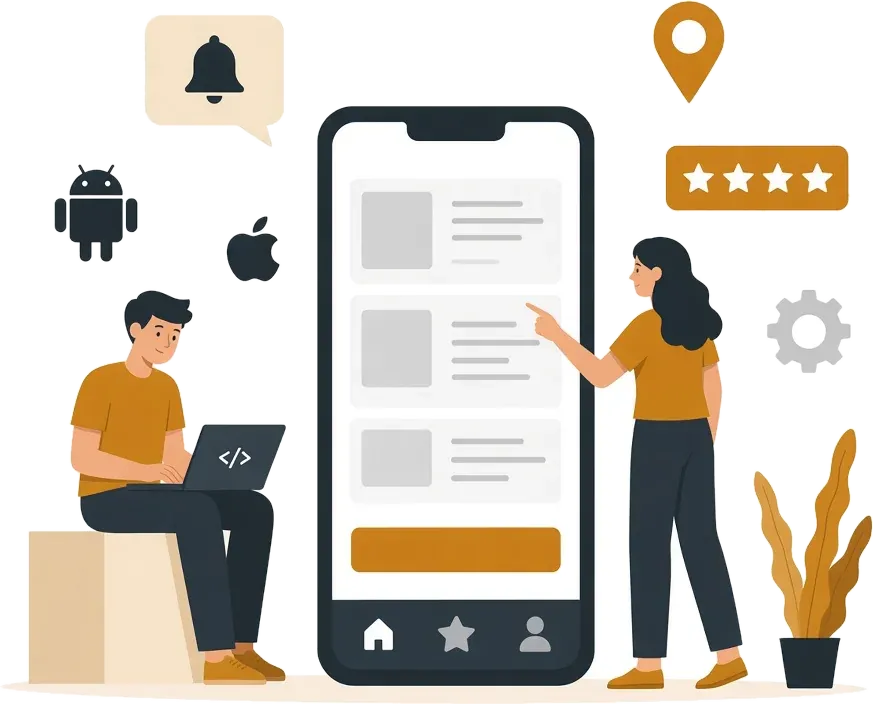

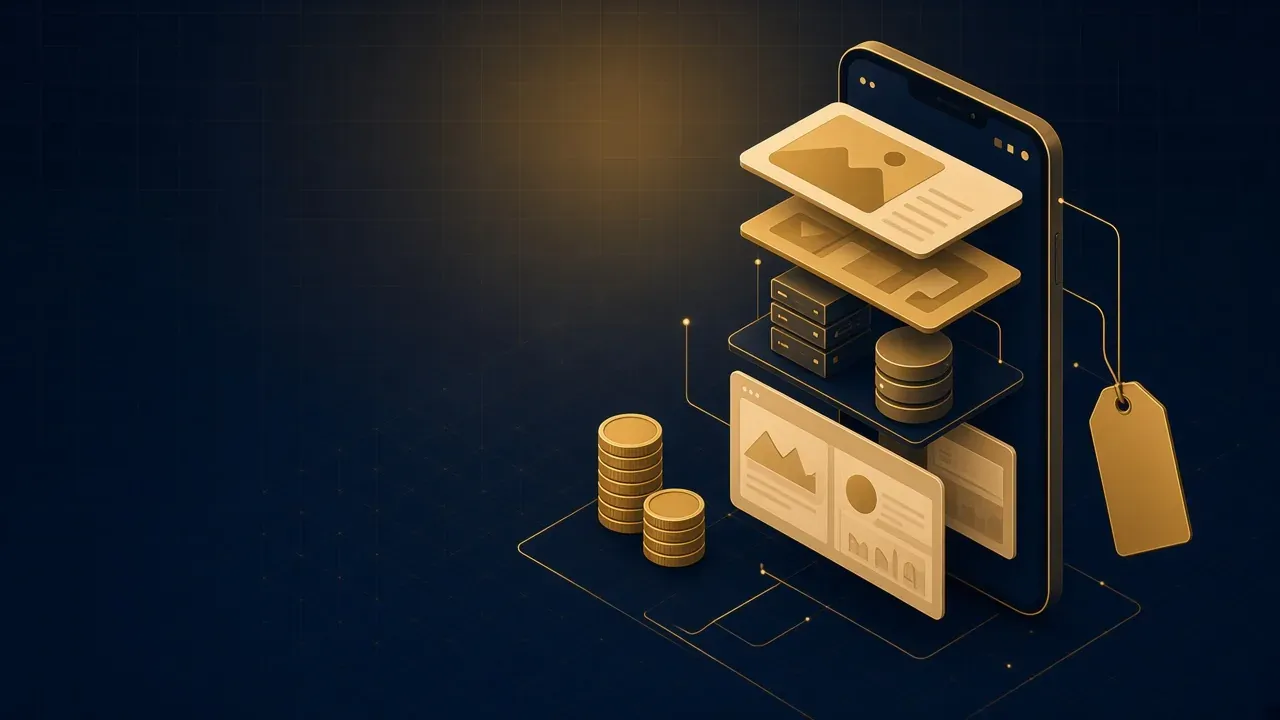

An app is not just screens: there is a back-end, a dashboard, publishing and maintenance. We break the cost down so you know where your budget goes.
When someone with an idea looks at a successful app on their phone, they see only the screens: sign in, the menu, the order button. Behind those screens is a whole system the user never sees, and it is usually the bigger part of the work and the cost. This article explains what any app is made of, what pushes the price up or down, and how to start on a sensible budget.
An app is three parts, not one
- The app itself: what users install on Android or iPhone. Screens, navigation, notifications, and use of the camera or location.
- The back-end: the server, database and APIs that store accounts, orders and payments and send notifications. Without it the app does not work.
- The dashboard: the website your team uses to manage users, orders, content and reports.
When comparing quotes, make sure every quote covers all three. Some cheap quotes price the app alone, and you later discover that the back-end and the dashboard are "out of scope".
What sets the price?
- Number and complexity of screens: an information screen is not the same as a live-tracking map.
- User types: an app for customers only is simpler than a system with customers, service providers and supervisors, each with a different experience.
- Special features: online payment, map tracking, live chat, file uploads, offline mode. Each is a small project in itself.
- External integrations: payment gateways, SMS services, the company's existing systems.
- Design depth: a custom, well-researched user experience costs a little more, but clearly raises the share of people who complete an order.
Rough bands
A simple app (content or catalogue with contact): the lowest cost, a few weeks of work.
A mid-sized app (user accounts, orders, payment, notifications, dashboard): the most requested band; our mobile app plan starts from EGP 50,000 for Android and iOS.
A multi-party system (customer, provider, live tracking and matching): the highest cost, best built in stages. An example is the Ezhalha app, which connects drivers with the nearest roadside-assistance or maintenance provider.
Costs outside the development price
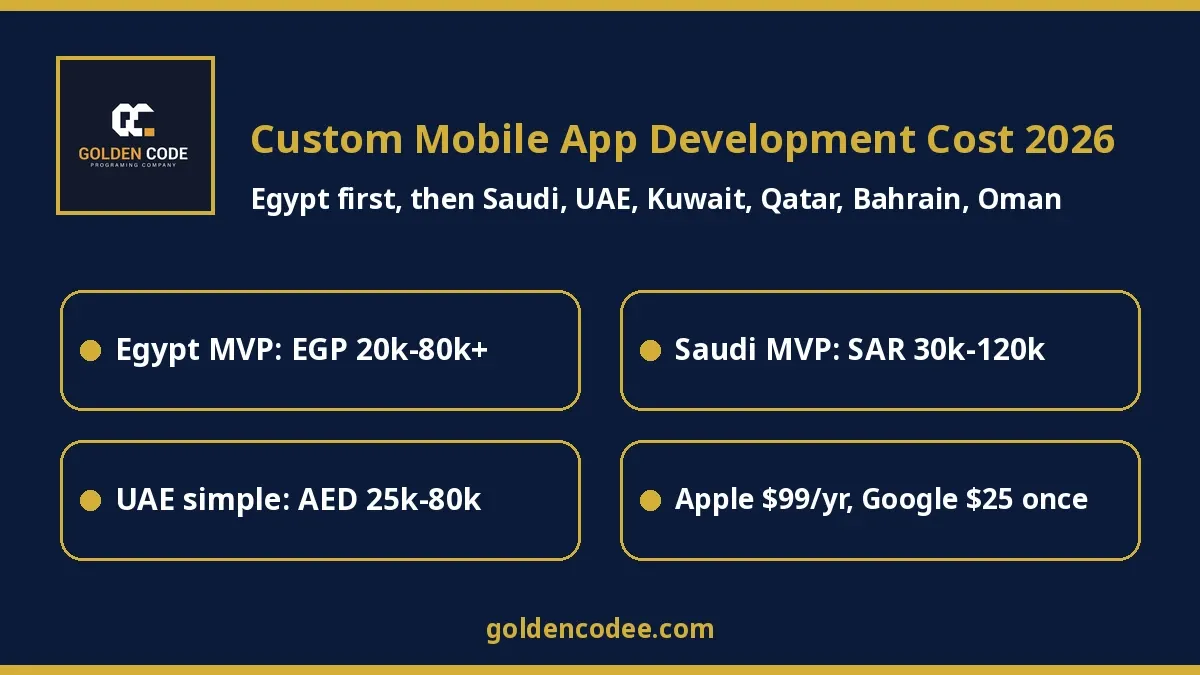
- Google Play developer account: a one-time fee (USD 25).
- Apple developer account: a yearly subscription (USD 99).
- Server and hosting: a monthly cost that grows with the number of users.
- Third-party services: SMS verification, maps, and notifications at high volume.
- Maintenance: new versions of Android and iOS are released every year, and the app needs updating to stay compatible and accepted in the stores.
These accounts should be in your name, not the developer's. If the company publishes the app from its own account, you do not really own it.
Start with a smart first version (MVP)
The biggest mistake we see is trying to build every idea into the first release. The result: a drained budget, a long timeline, and an app that launches late with features nobody asked for. It is better to identify the core job customers will pay for, build the simplest experience around it, launch it, and listen to users.
For example, a delivery app might start with ordering, cash on delivery and order-status tracking, and leave the wallet, loyalty points and chat for version two.
How to protect your budget
- Ask for an interactive design prototype before development, and try it on your phone.
- Tie payments to clear milestones, and ask for a test build after each one.
- Make sure the full source code is handed over to you.
- Ask about the warranty period and the monthly maintenance cost after it.
- Ask who will work on your app, and whether you will talk to them directly.
Expected timeline
A mid-sized app usually takes eight to fourteen weeks: a few weeks of planning and design, development in stages, testing on real devices, then store review, which can take several days.
Native, cross-platform, or a web app?
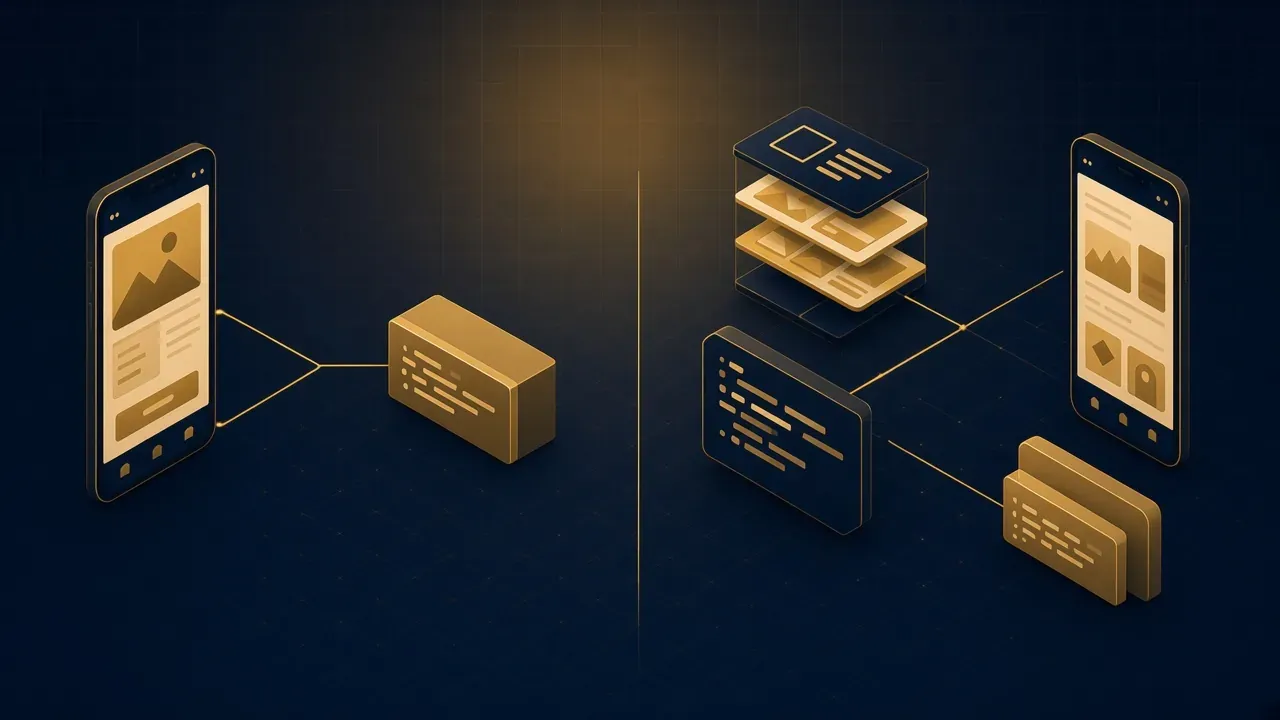
The technology choice also affects the price. Building two separate native apps, one for Android and one for iOS, roughly doubles the app-side work. Cross-platform frameworks such as Flutter and React Native let one codebase run on both, which suits most business apps and keeps maintenance simpler. And in some cases a fast, installable web app is enough to test an idea before investing in store apps. We cover this choice in detail in our article on Flutter versus native development.
Signs of a quote to be careful with
- A single price with no list of screens or features.
- No mention of the back-end, the dashboard or publishing.
- The app will be published from the developer's own store account.
- Full payment upfront, or no test builds until the end.
The bottom line
An app's price depends on what it does, not only on how many screens it has. Count the three parts and the side costs, and start with a first version that tests your idea. If you want an estimate for your idea, read about our mobile app development service or tell us about it in a free session.