Blog details
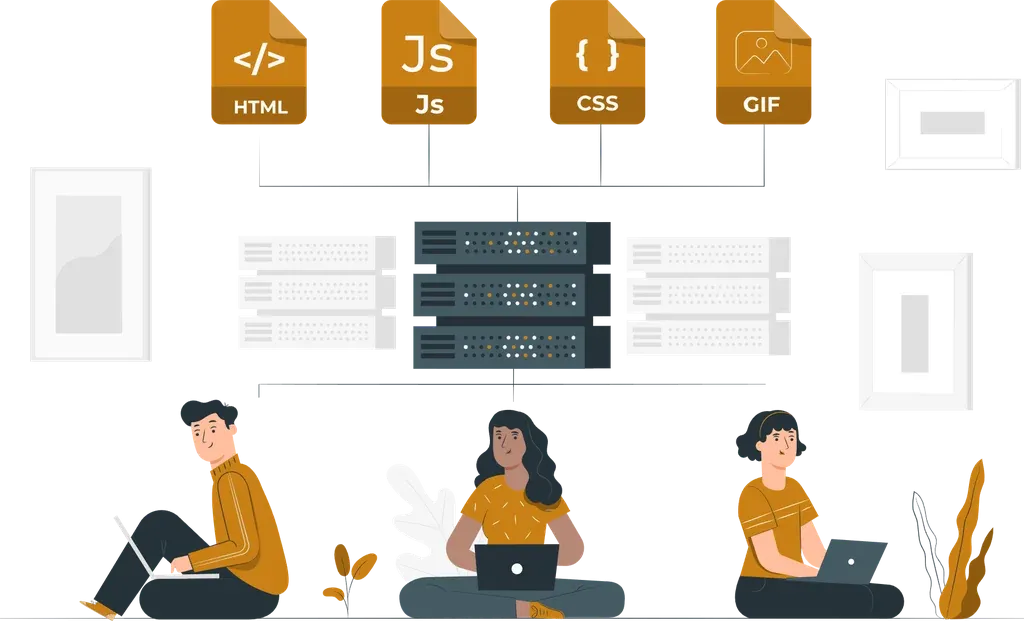



Three kinds of website with different costs, timelines and goals: the difference with real examples, and when to start simple or build a platform.
Many business owners start by asking for "a website", then discover during the conversation that they need something quite different. Some ask for an online store while they do not sell online at all; others ask for a simple site when they actually need a system to manage their customers. The wrong choice means either paying more than you need or building something that does not solve your problem. This article separates the three most requested types.
The company website: your shop window
A company website shows who you are, what you offer, why customers should choose you and how they contact you. Its main job is to build trust and turn a visitor into a call or a message.
It suits you if: you provide services (a clinic, a consultancy, a construction company, a factory) and sales happen after personal contact, not with a single click.
It usually includes: home, about, services, past work, blog, contact, and a dashboard for editing content.
Examples from our work: the Index Consultations website explains HR services to a specialist audience, and the 3M Chemicals Group website presents the company's capabilities to industrial buyers in several markets.
Timeline and cost: three to six weeks; our plan starts from EGP 25,000.
The online store: selling around the clock
A store lets customers choose a product, add it to the cart, pay and track the order without talking to anyone. It lets you manage products, stock and orders from one dashboard.
It suits you if: you have products with fixed prices, want to sell to people you do not know personally, and can handle shipping and delivery.
It usually includes: product pages with photos and options (size, colour), a cart, online and cash-on-delivery payment, order tracking, sales reports and shipping integration.
Example: the Portafoto frame store, where customers choose size and colour on the product page.
Timeline and cost: six to ten weeks, from EGP 50,000. Watch for payment-gateway commissions and shipping costs; they sit outside the development price.
The platform: a system that serves several parties
A platform is more than a website; it is a system with different types of users, each with their own permissions and experience. Student, teacher and admin; or customer, service provider and supervisor.
It suits you if: your business model itself is digital: online learning, bookings, a marketplace of buyers and sellers, or a tool your customers use every day.
Examples from our work: the UniGuide university search and comparison platform, and the 3Lmni learning platform.
Timeline and cost: entirely feature-dependent; usually a first version with the key features in two to three months, then growth.
A quick comparison
- Goal: a company site builds trust, a store sells, a platform delivers a service.
- Users: a company site has visitors, a store has buyers, a platform has several user types with accounts.
- Complexity: rises from company site to store to platform, and with it time and cost.
- Maintenance: stores and platforms need more care because they hold data and payments.
Common mistakes when choosing
Building a store before demand is proven: if you currently sell through Instagram and WhatsApp with a limited number of orders, a company site with a product catalogue and a "order via WhatsApp" button may be a smarter, cheaper start; move to a full store when demand grows.
Building a full platform on day one: big ideas need testing. Start with a first version that tests the core assumption, then add features based on real user behaviour.
Relying on a Facebook page: social pages matter, but they are not yours, and they do not show up on Google when a customer searches for your service.
What about mobile apps?
Some business owners ask whether they should skip the website and go straight to an app. For most businesses the answer is no: customers find you through Google and shared links first, and a website is what they land on. An app makes sense when people will use your service repeatedly, such as ordering, booking or tracking something every week. In that case the website and the app usually work together, sharing the same back-end and dashboard, as with the Ezhalha car-services app and its marketing site.
Can you upgrade later?
Yes, if the first version is built properly. A company site built on a solid framework with a real dashboard can grow into a store by adding product and checkout features, rather than starting from scratch. This is why we recommend avoiding page builders and closed templates for any business that expects to grow: they are quick at the start, but they make every later step more expensive.
How to decide
Ask yourself three questions: how does my customer buy today? What step do I want them to take after visiting the site? And what will happen in a year if this works? The answers will point you to the right type. If you are still unsure, tell us about your business and we will suggest the right starting point, even if it is simpler than you expected. You can also compare our plans and prices before getting in touch.