Blog details
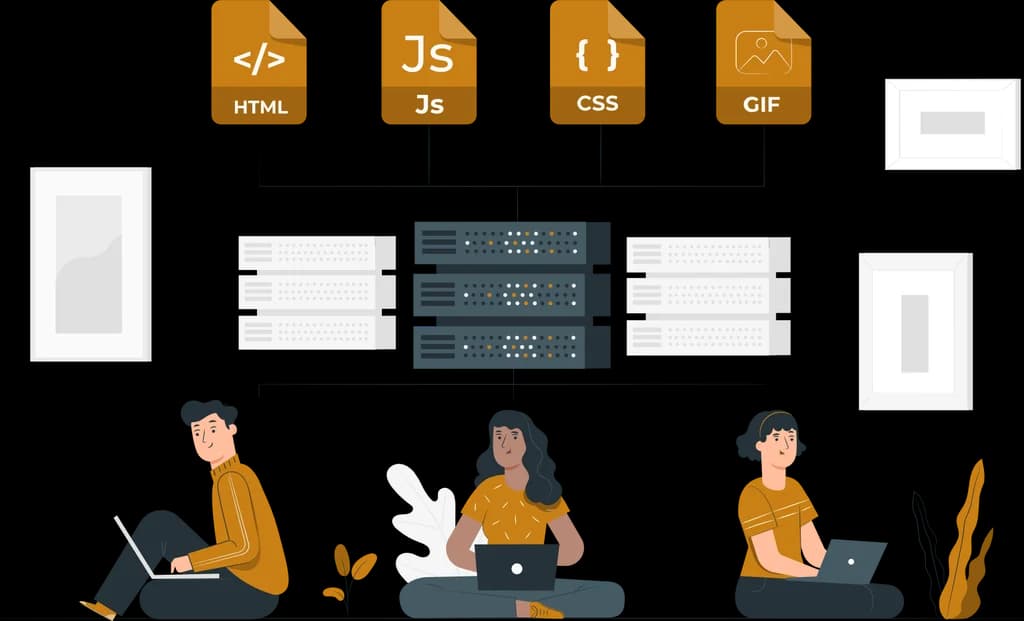



Custom HR and payroll software for Egypt and the Gulf: attendance, approvals, Mudad handoffs and bank reconciliation. Discuss your custom scope with us.
Short answer: Custom HR and payroll software connects employee records, attendance, approved salary calculations and payment evidence around your company's actual workflow. For an Egyptian business expanding into the Gulf, build separate country rules and verified bank or government handoffs—not a single salary formula or a promise of unrestricted Mudad and Qiwa APIs.
By Mohamed Samy, senior Laravel/PHP backend developer with seven years of experience building backend systems. Published: 7 November 2026. Updated: 7 November 2026.
Payroll problems rarely start with a missing dashboard. A supervisor approves an absence after payroll closes, someone corrects an allowance in a spreadsheet, and finance uploads a different version to the bank. The employee sees a payslip that no longer matches the payment. Buying a prettier attendance screen does not fix that sequence.
This guide starts with an Egyptian employer, then follows the same business into Saudi Arabia and the wider Gulf. Golden Code builds custom software from scratch; we do not resell an HRMS or configure a ready-made payroll product as our offering. The useful question is not whether custom is always better. It is whether your approval process, existing systems and country boundaries justify owning the software.
Demand: what buyers are actually asking
Google autocomplete checked on 7 November 2026 in Egypt returned “برنامج موارد بشرية excel”, “مجاني”, “سحابي” and “متكامل”. For “hr payroll software”, suggestions included “for small business”, “price”, “uae” and “dubai”. Saudi suggestions for “نظام موارد بشرية” included integrated, cloud and Saudi variants; “hr software saudi arabia” produced payroll-specific and comparison variants. These are query suggestions, not search-volume measurements or proof that every searcher wants custom development.
The free and Excel terms matter. A small employer with straightforward payroll may not need a custom build at all. This article targets the next situation: separate attendance and accounting tools, approvals that cross branches, and payroll rules that cannot safely live in one person's spreadsheet.
Trends did not provide a usable reading on the check day: the API returned HTTP 429, so no trend score or growth claim is reported. Review the public comparison for Saudi HR searches or Egypt HR searches. Those windows end with a complete week rather than today's unfinished week.
There is a substantive regulatory reason to review payroll design too. Egypt's Labour Law 14/2025 entered into force on 1 September 2025. Saudi HRSD's certified-contract announcement describes phased enforcement through 2026. Neither creates an automatic need to buy new software; both make poorly controlled payroll data harder to ignore.
Egypt first: design the employee record before the salary screen
Start with who employs the person, where they work, and which contract and policy version applies. A group with an Egyptian company and a Saudi subsidiary should not treat a transfer as a branch-name edit. Legal employer, currency, bank details, entitlements and access permissions may change separately.
Keep an employee's history rather than overwriting it. A salary amendment should carry an effective date, approver and supporting document. A payroll run must retrieve the version that applied to that period, not whatever is current when an auditor opens the screen later.
The Library of Congress summary explains that the new Egyptian law replaces the previous labour law and applies to private-sector workers, with exclusions. Treat it as a starting source, not a substitute for your Egyptian HR adviser. Ask that adviser to approve leave, overtime, deductions, tax and insurance requirements applicable to your workforce. This article deliberately does not publish a universal Egyptian net-salary calculator or hard-code contribution rates.
Separate three kinds of rules: statutory requirements, contractual entitlements and company policy. They may interact, but they are not interchangeable. A manager's approval cannot waive a statutory entitlement. Your software should record a rejected exception and its reason instead of silently accepting every administrative override.
The payroll workflow worth building
A reliable run has explicit states: draft, reviewed, approved, exported, payment confirmed and reconciled. Moving backwards after approval should require a named actor, a reason and a new version. “Exported” must never mean “paid”.
| Area | Required behaviour | Acceptance evidence |
|---|---|---|
| Employee changes | Effective dates and approval history | Old period still reproduces |
| Attendance | Raw events separated from approved adjustments | Supervisor decision is traceable |
| Calculation | Versioned earning and deduction rules | Payslip explains each line |
| Approval | Separate preparer and final approver | No self-approved payment run |
| Bank export | Format tied to the actual bank specification | Sample passes bank validation |
| Reconciliation | Match returned results to employee and period | Rejected transfers remain open |
Attendance deserves its own boundary. A missing clock-out is an exception to investigate, not automatic evidence of unpaid absence. Preserve the raw device event and the approved correction separately. For overnight shifts, store actual timestamps and define how the shift belongs to a payroll period. Otherwise an employee working across midnight can appear absent on both days.
For calculations, use explicit decimal rounding policies and preserve the inputs. An administrator should be able to explain a payslip without asking a developer to inspect the database. Corrections after payment should normally become a controlled adjustment or supplementary run, not an invisible rewrite of the original record.
Saudi Arabia: distinguish Mudad, Qiwa and the bank
HRSD's wage-file upload service says wage protection files are uploaded through Mudad's compliance system. The described workflow selects the establishment, wage type and month, uploads the file, and reviews compliance information. Its prerequisites include establishment registration and bank accounts for the establishment and employees.
That is evidence for an official upload workflow. It is not evidence that every software developer receives an unrestricted submission API. A proposal should identify the actual bank format, employer authorization and permitted platform access before promising direct integration. If access is not confirmed, a validated export plus an authorized human upload is an honest first release.
Qiwa handles the certified employment-contract side relevant to HRSD's announcement. The announcement states that the wage clause can serve as an executive instrument subject to its conditions, with verification involving Mudad. It lists renewed fixed-term contracts from 6 March 2026 and non-fixed-term contracts from 6 August 2026 in its phased rollout. Store the contract reference and approved wage components alongside payroll evidence; do not equate a local “approved” badge with government acceptance.
Keep original bank and platform responses. Where social-insurance reconciliation is needed, use the correct contribution basis approved for that worker; do not assume it equals every earnings line or net pay. A useful exception report explains a difference. It does not merely show a red total and ask payroll staff to guess.

UAE and the rest of the Gulf: one product, separate local adapters
The UAE Central Bank describes UAEWPS information flowing from employers through contracted wage-payment agents. MoHRE guidance describes payment through approved banks, financial institutions and exchange houses. A Saudi export is therefore not a UAE export simply because both are called WPS.
For UAE entities, obtain the relevant agent's specification and confirm the employer's regulatory coverage before implementing the handoff. Keep the returned acceptance and payment status distinct. Salary files contain sensitive personal and financial data; they should not circulate as ordinary email attachments between developers and HR.
Bahrain, Kuwait, Oman and Qatar need their own discovery checklist too. Do not advertise a Gulf-wide compliance switch. For each entity, confirm the labour authority, bank process, insurance regime, currency, entitlement rules and permitted data location with local advisers and service providers. The software architecture can be shared while these policies remain separate.
What to build, and what not to promise
Build a common employee and approval core with country-specific calculation and export adapters. Give each adapter a version and effective date. A bank specification change should not force an unrelated leave workflow to be rewritten.
Keep accounting integration narrow and auditable. Export the approved payroll journal by cost centre, then reconcile acknowledgments. If your accounting and purchasing already need a larger redesign, read our custom ERP guide. HR payroll is a distinct workstream, not another name for the whole ERP. If you also want payroll approvals or file delivery to run automatically after they are confirmed, see AI business automation in Egypt and the Gulf.
Security is part of scope, not a decorative padlock. Restrict salary visibility by role and legal entity, require strong authentication for privileged users, encrypt sensitive storage and transfers, and test recovery from backups. Logs should show who changed a bank account without exposing the full account value to everyone who can view an audit screen.
A configurable product may suit an employer whose needs are standard. Custom development becomes defensible when a documented operational gap justifies its maintenance burden. Golden Code's offer is the custom route only: workflow design, implementation, integrations where access is verified, and handover. See our development services.
Six steps to scope custom HR and payroll software
Step 1: Map employers and countries
List each legal entity, payroll owner, currency, worker category and local adviser. Separate confirmed requirements from assumptions. Give every unresolved legal question an owner before development begins.
Step 2: Bring a real payroll sample
Use anonymized examples covering ordinary salary, unpaid leave, overtime, a mid-period change and a rejected transfer. Ask finance to explain the expected result line by line. A demonstration using only the easiest employee hides the expensive decisions.
Step 3: Draw approval and exception paths
Name who prepares, checks, approves and releases each run. Include late attendance changes, employees joining after cutoff and bank-detail changes. Decide which actions require a second approval.
Step 4: Verify each integration boundary
Request bank file specifications and platform permissions from the employer's authorized contacts. Label each connection as verified API, supported file exchange or manual handoff. Do not price an imaginary API as a completed integration.
Step 5: Run parallel payroll and investigate differences
Compare the proposed system with the current approved process over an agreed representative period. Categorize every difference: source data, policy, calculation, rounding or bank mapping. The number of test cycles is a project decision, not a compliance guarantee.
Step 6: Agree ownership and operating support
Specify source-code handover, documentation, backups, rule-update responsibility and incident response. Approve a go-live checklist with HR and finance. Keep a fallback process for a rejected file or unavailable provider.
FAQ
Is custom HR software necessary for a small company?
Not always. If standard software handles your approved policies and reporting, custom may add unnecessary maintenance. Build only around documented gaps.
Can Golden Code connect directly to Mudad and Qiwa?
Only where your employer account and the platform provide verified, authorized access. Otherwise scope a supported file or human handoff; official upload guidance is not proof of an open API.
Can one system handle Egypt and Saudi payroll?
Yes, with separate legal entities, effective-dated rules and country-specific exports. Sharing an employee screen does not mean sharing tax, insurance or wage-protection logic.
Does generating a WPS file prove salaries were paid?
No. Keep export, submission acceptance, bank processing and payment reconciliation as distinct states, supported by returned evidence.
What does custom HR and payroll development cost?
We do not have a fixed package for this work; any fee is a custom quote after we see the payroll rules, countries and verified integrations. No Golden Code price is quoted here.
Who approves the legal payroll rules?
Your HR, finance and qualified local advisers approve the requirements. Software implements and records those decisions; it does not replace legal or payroll advice.
Sources and next step
Sources checked on 7 November 2026: ILO NATLEX: Egypt law and commencement; Library of Congress legal summary; HRSD wage-file service; HRSD contract announcement; HRSD wage-protection guide; UAE Central Bank WPS; MoHRE guidance.
If your payroll team is reconciling several spreadsheets every month, send an anonymized outline of the workflow. We can discuss a custom scope around the broken handoffs first, without replacing systems that already work.