Blog details
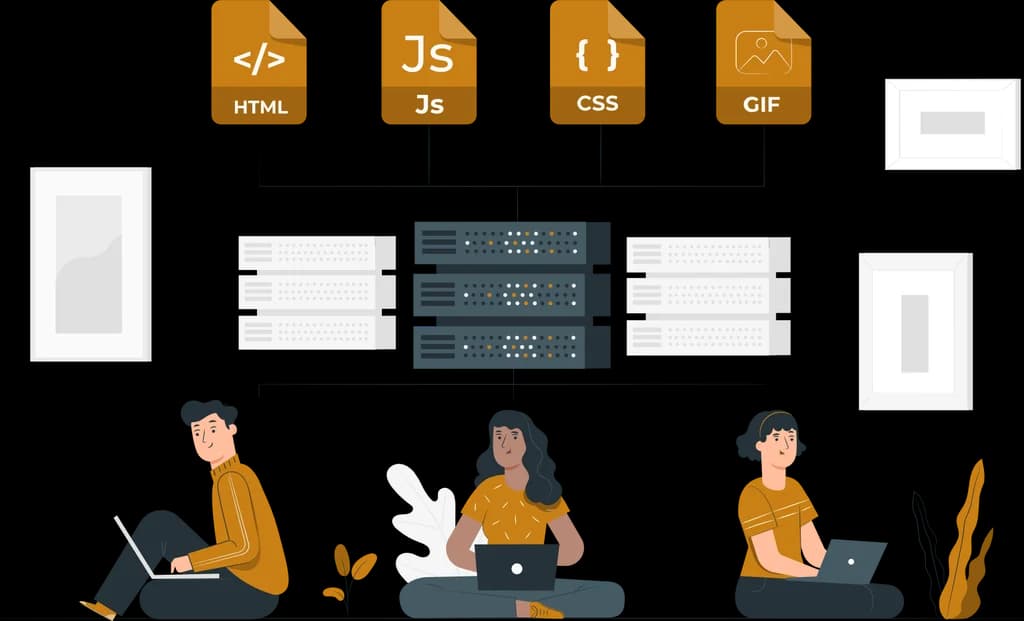

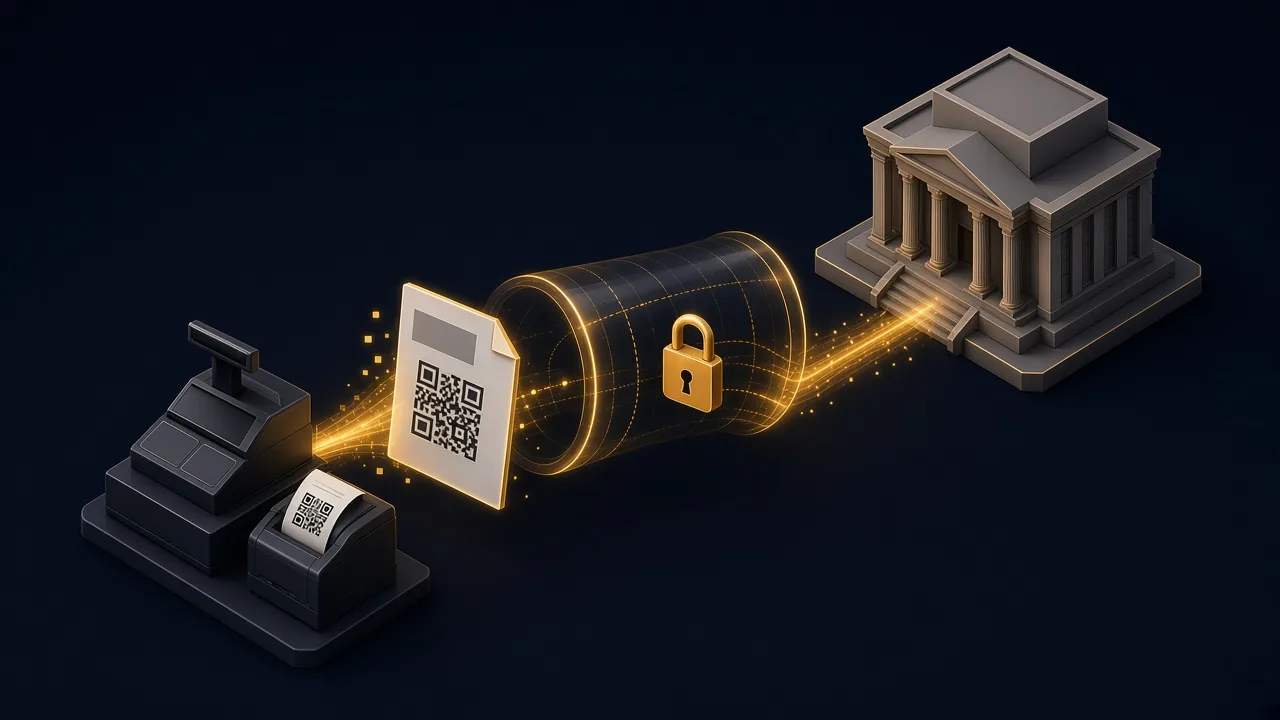

Egypt e-receipt for restaurants and shops: who is obligated, POS onboarding, and custom POS/ERP integration with ETA. Get a free quote from Golden Code.
Short answer: Egypt's e-receipt system is the Egyptian Tax Authority's (ETA) B2C receipt mandate. A registered taxpayer that sells to a final consumer must issue electronic tax receipts once an ETA decision names that taxpayer. The latest published decision on ETA's obligations page, as of today, is Decision No. 361 of 2025 (first sub-phase of the ninth main phase), which required the named taxpayers in Greater Cairo and Alexandria to issue live e-receipts from 15 November 2025 (31 December 2025 for other governorates under the ministerial schedule). Before the first live receipt, each POS device must be registered and activated on the ETA portal, and receipts must reach the system in near real time and within 24 hours. If your sales already run on a custom POS, ERP or Laravel/PHP system, you can usually add an ETA module to that system instead of replacing it.
By Mohamed Samy, senior Laravel/PHP backend developer (7 years). Published: 5 November 2026. Last updated: 5 November 2026.
Most of the Egyptian restaurant, pharmacy and clinic owners I talk to do not start with "we need an API". They start with a tax notice, a POS that still prints a paper slip, and a question: do we throw away the system we already paid for? Almost always the answer is no. The sale data is already in their database. What is missing is the ETA e-receipt layer: device onboarding, the signed receipt payload, the UUID and QR code, and the live send to the authority.
This guide is for owners and finance or IT leads at Egyptian businesses that sell to final consumers. It is written for Egypt first. The same backend pattern shows up when a Gulf company needs ZATCA or UAE e-invoicing, but those are separate systems with their own rules. I only use facts I checked on ETA's own pages and on published tax guidance dated 2025–2026. Sources are listed at the end.
Is there real demand for Egypt e-receipt help?
I do not publish search volumes I cannot verify. Here is what public tools showed when I checked on 5 November 2026 (volumes: not available; Google Trends returned rate limits today):
- Google autocomplete (Egypt) for "الايصال الالكتروني" suggests "للصيدليات", "في مصر", "للمطاعم", "للاطباء", "odoo", "منظومة الايصال الالكتروني", "برنامج الايصال الالكتروني" and "استعلام الايصال الالكتروني". People are searching by vertical and by how to connect a system.
- Google autocomplete (Egypt) for "برنامج كاشير مطعم" suggests free and paid POS software, open-source options, and "سعر برنامج كاشير مطعم". Many searches are for free tools; this article is for businesses that already outgrew a free cash drawer and need a real link to ETA.
My reading: restaurants, pharmacies and clinics are asking the practical question, not the legal theory. That is why the rest of this article stays on POS onboarding and custom integration.
What ETA's e-receipt decisions say
E-receipt is not the same as Egypt's B2B e-invoice. E-receipt covers sales to the final consumer. E-invoice covers business-to-business and business-to-government supplies. A business can be in one system, both, or neither, depending on how it sells and which decisions name it.
The legal base is Law No. 206 of 2020 (Unified Tax Procedures), and Minister of Finance Decision No. 230 of 2022, later amended by Decision No. 38 of 2024. ETA then publishes phase decisions that name the obligated taxpayers and the live date for each list. You confirm your status with ETA's e-receipt obligation inquiry, not by guessing from a blog table.
Recent published milestones on ETA's obligations list include:
- Decision No. 225 of 2025 — first sub-phase of the eighth main phase; named taxpayers live from 15 July 2025 (ETA news).
- Decision No. 281 of 2025 — second sub-phase of the eighth main phase; named taxpayers live from 15 September 2025 (ETA news).
- Decision No. 361 of 2025 — first sub-phase of the ninth main phase; named taxpayers in Greater Cairo and Alexandria live from 15 November 2025 (31 December 2025 for other governorates in the ministerial schedule), and must also register on the incentive portal "فاتورتك – حمايتك وجايزتك" (ETA news; geography of phase 9 as summarized in NPI Egypt).
As of the checks I made for this article, Decision 361 is the latest decision listed on ETA's obligations page. Being in a sector that appeared in an earlier phase table is not enough; what matters is whether your registration number is on a published list and which date that list carries. ETA also keeps a guide page for e-receipt services, including POS registration, the technical SDK link for IT teams, and the support number 16395 / eReceipt.hd@eta.gov.eg.
What your POS or ERP must actually do
From the backend side, a live e-receipt flow has a few non-negotiable pieces:
- Taxpayer registration on the e-receipt system, with B2C capability enabled.
- POS device registration and activation for every terminal or issuing channel before it sends anything.
- Item and service coding (GS1 or EGS), so each line maps to a code the authority accepts.
- A signed electronic receipt with a unique UUID and a QR code the buyer can check.
- Near-real-time submission to the live environment, with a practical upper bound of 24 hours from issue time.
- Storage of ETA's response, so your team can see accepted, rejected and delayed receipts without opening a spreadsheet.
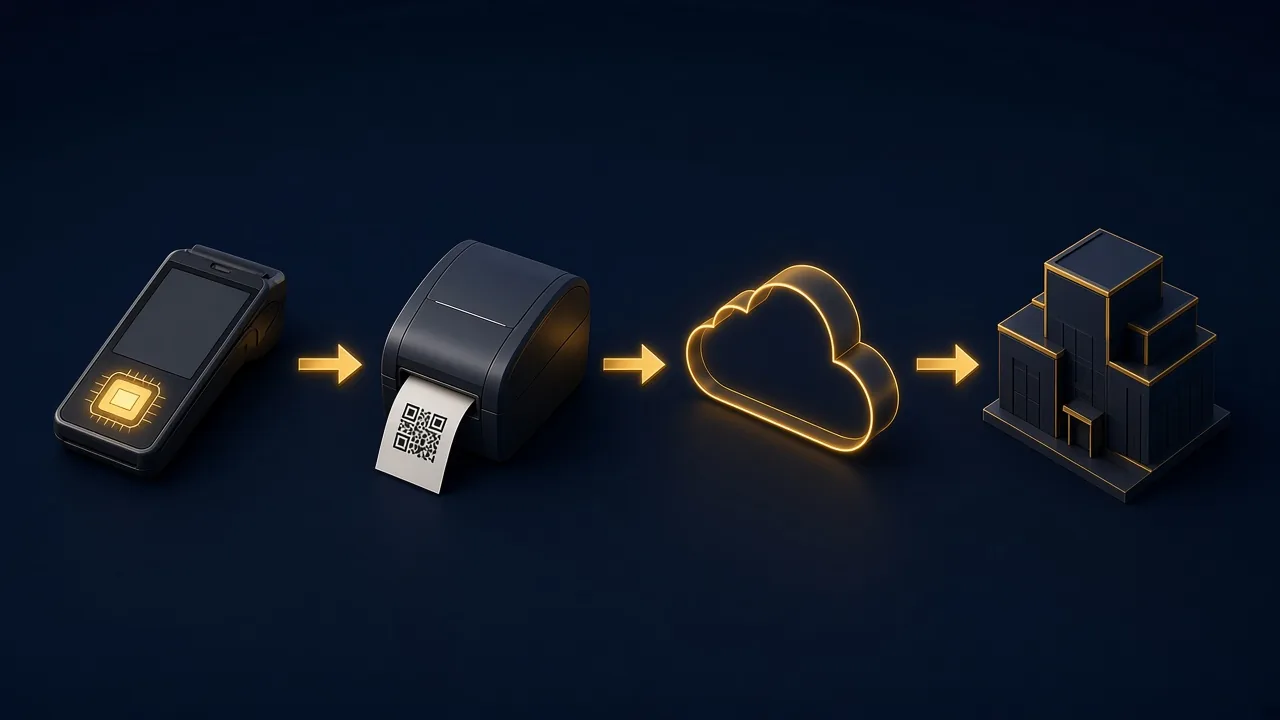
If a receipt misses the normal window, ETA's published FAQ material describes a late-submission path with conditions and limits. Do not plan your daily operations around late submission; treat it as an exception.
For natural-person buyers, ETA's Receipt v1.2 rules require the buyer's national ID once the receipt value reaches the configured threshold (EGP 150,000 for receipt version 1.2 and newer; EGP 50,000 for versions 1.0–1.1), per the ETA SDK receipt issuance FAQ. That is a field rule on one receipt, not a turnover test for joining the system.
Custom integration vs a ready POS or Odoo
You have two honest options.
Option A: move the checkout to a ready product that already talks to ETA. Some POS vendors and ERP localizations, including Odoo-oriented searches that autocomplete already shows, ship Egypt e-receipt connectors. If your current "system" is Excel plus a cash drawer, a ready product is often faster. I tell clients that directly.
Option B: integrate the system you already run. This makes sense when:
- Orders, tables, delivery, memberships or multi-branch stock already live in a custom POS or ERP the team uses every day.
- Replacing that system would mean re-training staff and re-entering masters during a compliance deadline.
- You want the ETA calls inside your own Laravel/PHP backend, with your own logs, retries and permissions.
In option B we do not replace your product. We add an Egypt e-receipt module: map your sale lines to ETA's receipt schema, sign and send, store the UUID and QR, mark failures clearly, and support more than one activated POS. Pricing for that work is a custom quote after we see how many devices and branches you have. We do not have a fixed package for e-receipt work; any figure we send you later is labeled proposed and adjusted after scoping.
If the deeper problem is that stock, purchases and accounts are still outside the POS, read the custom ERP guide for Egypt and the Gulf first. E-receipt often exposes those gaps. Saudi readers who need B2B clearance should use the ZATCA Phase 2 Wave 25 guide. UAE readers should use the UAE e-invoicing 2027 guide.
Mistakes I see on Egypt e-receipt projects
- Assuming the sector table is enough. Your obligation date is the date on the ETA decision that names you. Check the inquiry service and keep a screenshot in the compliance file.
- Activating POS devices on go-live day. Device inspection, portal registration, client ID/secret and activation take time. Do them before the deadline.
- Sending from a channel that is not activated. ETA's guide is clear: activate the POS before any channel sends from it.
- Treating e-receipt like e-invoice. B2B supplies need the e-invoice system. Mixing the two payloads is a common integration bug.
- No monitoring for rejected or unsent receipts. A silent failure for a busy Friday night leaves a backlog that late submission may not fully cover.
- Building only the happy path. Returns, discounts, multi-branch stock and delivery apps are where field mapping breaks.
How to connect your existing POS or ERP to Egypt e-receipt in 6 steps
Step 1: Confirm you are named and note the live date
Search your tax registration number in ETA's e-receipt obligation inquiry. Save the decision number and the live date. If you are not named yet, you can still register voluntarily, but do not invent a deadline that is not on your record.
Step 2: Inventory every channel that issues a consumer receipt
List each branch POS, handheld, kiosk, ecommerce checkout or delivery integration that issues a B2C receipt under your registration. Count devices; that count drives onboarding and testing effort.
Step 3: Register the taxpayer and activate each POS
Complete portal registration, obtain device credentials after inspection where required, and activate every issuing unit before production traffic. Keep client IDs and secrets in a secrets store, not in a chat group.
Step 4: Map your sale data to ETA's receipt schema
Compare your database fields with the SDK and receipt version you will use (including UUID, QR, item codes, taxes and buyer ID rules). Fill the gaps before writing production send logic.
Step 5: Build the send module with retries and staff-facing errors
Add signing, submission, response storage and a queue with retries. Show clear errors to cashiers and managers when ETA rejects a receipt, and block reuse of a failed UUID the wrong way.
Step 6: Test on pre-production, then watch the first live week
Run full-day scenarios: normal sales, returns, offline recovery if you support it, and multi-POS concurrency. After go-live, review unsent and rejected receipts daily for at least the first week.
FAQ
Who must issue Egypt e-receipts?
Registered taxpayers that sell to a final consumer, once an ETA phase decision names them. Confirm with ETA's obligation inquiry rather than with a generic sector table.
Is Egypt e-receipt the same as the e-invoice?
No. E-receipt is for B2C sales to the final consumer. E-invoice is for B2B and B2G supplies. Many businesses need one; some need both.
What is the latest ETA decision mentioned in this article?
Decision No. 361 of 2025, the first sub-phase of the ninth main phase, live from 15 November 2025 for Greater Cairo and Alexandria (31 December 2025 for other governorates). Always re-check ETA's obligations page for anything newer.
Can I keep my custom POS or ERP?
In most cases, yes. An ETA module can be added to an existing POS, ERP or Laravel/PHP system so it creates, signs and sends receipts itself.
How fast must a receipt reach ETA?
ETA's published guidance requires near-real-time submission, with a practical limit of 24 hours from issue time. Late submission exists but is conditional and limited.
Do I need a new POS hardware box from ETA?
Not always. ETA documents both integration of your own systems through the SDK and processes for obtaining or certifying POS devices. Your path depends on your setup and whether you join specific facilitation programs; follow the current ETA guide page.
Sources
- Egyptian Tax Authority, Decision 361 of 2025 news (checked 5 Nov 2026).
- Egyptian Tax Authority, Decision 281 of 2025 news (checked 5 Nov 2026).
- Egyptian Tax Authority, Decision 225 of 2025 news (checked 5 Nov 2026).
- Egyptian Tax Authority, e-receipt obligation decisions list (checked 5 Nov 2026).
- Egyptian Tax Authority, e-receipt services guide (checked 5 Nov 2026).
- Egyptian Tax Authority, SDK receipt issuance FAQ (National ID threshold) (checked 5 Nov 2026).
- Egyptian Tax Authority, e-receipt obligation inquiry.
- NPI Egypt, Egypt e-receipt guide (updated 9 Oct 2026; used for Law 206/2020, Decision 230/2022, the 24-hour rule and the 31 December 2025 date for other governorates).
Need your POS or ERP connected to Egypt e-receipt?
If your receipts come from a system built for your business, send a short note: how many branches and POS devices you run, whether you also issue B2B e-invoices, and which ETA decision (if any) already names you. We will tell you honestly whether a ready connector is enough or a custom module makes more sense. We build the integration around your existing stack and work alongside your tax advisor; we are not a substitute for ETA support. You will get a proposed quote after we review the system. Reach the Golden Code team through our contact page.